



Protect the value
of your solar production
Bij Scholt staan diversiteit, gelijkheid en inclusie centraal. Verschillende perspectieven versterken onze cultuur en stimuleren innovatie. Zo creëren we een omgeving waarin iedereen zich welkom voelt en samen kan groeien.
Solar capacity is growing, but more generation does not automatically mean more value. When solar parks produce at the same time, prices can fall just when your output peaks. Scholt Energy helps you bring production to market and respond more intelligently to changing price and grid conditions.
Preferred energy partner of


Solar's role is growing. Its market position is changing too
Solar has become an increasingly important part of Europe's electricity mix. That growth changes the commercial environment in which solar assets operate.
Your production is concentrated in daylight hours and strongly correlated with other solar assets. As installed capacity grows, high solar output can increasingly coincide with low or negative wholesale prices. The commercial question therefore shifts from simply maximising production towards protecting the value of each generated MWh.
Your contract determines how much market opportunity remains
A long-term fixed structure can create revenue predictability, while greater market exposure can preserve opportunities to respond to price movements.
The right balance depends on the asset, financing structure, subsidy position and appetite for market risk. There is no single route-to-market structure that is optimal under all market conditions.

What puts the value of your solar asset under pressure?
Solar parks naturally produce at similar times. As solar capacity increases, large volumes enter the market simultaneously and can push daytime prices down.
The consequence is that your realised price can develop differently from the average electricity price. Asset performance therefore depends increasingly on the value captured during your actual production hours.
Periods of abundant renewable generation and limited demand can result in negative wholesale prices. The IEA reported that negative prices occurred during 8–9% of wholesale hours in the Netherlands and Germany in the first half of 2025.
For producers, continuing to generate is not automatically the most attractive commercial decision during every negative-price period. Contract structure, subsidies, imbalance exposure and flexibility options all influence the right response.
A technically productive solar park can still face commercial restrictions when the local grid cannot accommodate all available generation.
This makes grid position increasingly relevant to asset strategy. Controlled curtailment and, where appropriate, storage can create alternatives to simply accepting an uncontrolled restriction.
Solar output can change quickly as weather conditions develop. Differences between forecast and actual production affect the volume that needs to be corrected or settled in the market.
Accurate forecasting and active imbalance management therefore matter alongside the price achieved for the electricity itself.
A long-term fixed structure can create revenue predictability, while greater market exposure can preserve opportunities to respond to price movements.
The right balance depends on the asset, financing structure, subsidy position and appetite for market risk. There is no single route-to-market structure that is optimal under all market conditions.

What is changing for solar producers?
Solar continues to expand within the European electricity system. More simultaneous generation can deepen the difference between average market prices and prices realised during solar production hours.
What this means for you: assess your route-to-market strategy against the actual production profile of your asset, not only against baseload market prices.
Negative prices and wider intraday price spreads make the ability to change production or shift energy in time more commercially relevant.
What this means for you: curtailment and storage should be evaluated as part of the commercial strategy around the asset rather than only as technical measures.
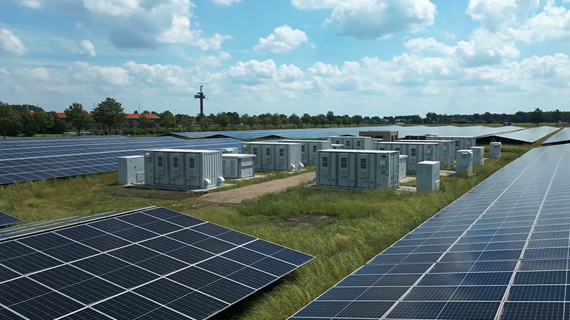
A battery can separate the moment electricity is generated from the moment it reaches the market. This creates opportunities to respond to price spreads, grid constraints and flexibility markets.
What this means for you: for suitable projects, the economics of a solar park increasingly need to be considered together with the potential value of co-located flexibility.
Day-ahead trading remains important, but changing forecasts and market conditions continue after the day-ahead position has been established.
What this means for you: forecasting, intraday decisions and flexibility can increasingly influence realised asset value.
Our take
“The best solar strategy is no longer simply to produce every available MWh
The value of solar is increasingly determined by when electricity reaches the market, what that electricity is worth at that moment and how the asset can respond when conditions change.
That requires an integrated approach. Route-to-market, forecasting, imbalance management, price strategy, curtailment and storage should not be assessed independently.
For solar producers, flexibility is becoming part of commercial asset management.”
How Scholt Energy helps
Choose an offtake structure that fits your asset, revenue objectives and appetite for market exposure. Scholt Energy combines market access with forecasting, balancing, imbalance management and settlement, helping you manage the commercial side of your solar production through one integrated approach.
Explore our PPA solutions

When high solar output coincides with low or negative prices, producing every available MWh is not always the best commercial choice. Through curtailment, battery storage and our Virtual Power Plant, Scholt helps you use available flexibility to respond to changing market and grid conditions.
Explore flexibility for solarWhy solar producers work with Scholt Energy
Offtake, balancing and flexibility can form part of one commercial strategy instead of being managed as isolated activities.
Scholt's PPA proposition includes its BRP role, forecasting and imbalance management, reducing the need for producers to build these market capabilities internally.
Scholt's VPP connects renewable generation, batteries and other flexible assets and coordinates them against relevant market and grid signals.
Scholt Energy uses in-house algorithms to manage flexible assets and connect renewable generation, storage and other flexibility within its VPP approach.
What others ask
That depends on your contract, subsidy position and flexibility arrangements. Continued production is not always the most attractive option. Where technically and contractually possible, controlled curtailment can be considered against the value of continuing to generate.
No. The risk allocation depends on the PPA structure. Price, volume, profile, imbalance and other risks need to be assessed separately. The appropriate structure depends on your asset and commercial objectives.
Potentially, yes. Scholt's existing PPA proposition allows flexibility to be integrated where the producer grants the relevant rights and technical and market conditions permit it.
Curtailment can be relevant when the expected value of continued generation is lower than the value of reducing output, or when grid conditions require a response. The calculation depends on prices, subsidies, contract terms, imbalance and any available flexibility compensation.
Forecasting determines the expected market position of your production. Differences between forecast and actual output can create imbalance exposure, making forecasting and imbalance management important parts of route-to-market performance.
Discuss the changing value of your solar production
Your solar park has its own production profile, contract structure, grid position and flexibility potential. We can assess these together and identify where market access, offtake and active optimisation can strengthen your commercial approach.