




Skip to content
H1 Scholt label title

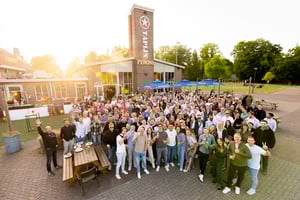
Bij Scholt staan diversiteit, gelijkheid en inclusie centraal. Verschillende perspectieven versterken onze cultuur en stimuleren innovatie. Zo creëren we een omgeving waarin iedereen zich welkom voelt en samen kan groeien.

“Build a long-term energy strategy that balances cost, risk, and sustainability goals. Energy management is not about measuring more, it’s about understanding better. Insight is only valuable when it leads to control and informed decisions.”

Challenges

The questions organisations struggle with

Consumption

How do we really monitor and manage consumption?

Most organisations already collect data. The challenge is structure: what to track, how often, and what to do when patterns shift. Without a clear routine, monitoring stays reactive.

Inefficiencies

How can we detect energy inefficiencies?

Energy waste often sits in peaks, timing mismatches or unnoticed behaviour. These inefficiencies are hard to spot without context, comparison and expert interpretation.

Waste & costs

What tools help reduce waste and costs?

Tools are useful, but only if they lead to decisions. The biggest value comes from actionable interpretation: what’s worth fixing now, what can wait, and what doesn’t move the needle.

Sustainability

How can energy management drive sustainability?

Sustainability targets require proof, reporting and progress. Without reliable insight, energy management and sustainability remain disconnected.

Decisions

Who helps us make the right decisions?
Energy touches operations, finance and strategy. Without expert guidance, decisions are delayed or based on incomplete information.

Talk to an expert

Get a clear understanding of your energy purchasing strategy, cost drivers and risks. Our specialists translate market complexity into practical advice, tailored to your organization and decision-making process.

Foundations

What effective energy management requires

Energy management only creates value when insight leads to action. Many organisations collect energy data, but without structure it remains difficult to translate information into decisions.

Effective energy management starts with reliable consumption data across locations and periods, making patterns and inefficiencies visible. Yet data alone is not enough. It must be interpreted in relation to operations, peak moments and changing market conditions.

To turn insight into control, organisations need a clear decision rhythm and alignment between operations, finance and sustainability. Energy management therefore becomes an ongoing process that evolves with your organisation and the energy market.

stock-market-analysis-on-digital-tablet-2025-03-31-11-41-01-utc
Our approach

How we support energy management in practice

Energy management turns data into practical improvements. We support organisations through a structured approach that combines insight, expertise and clear decision support. Energy management often reveals where the next improvement lies. Our approach includes:
A dedicated energy team

You work with specialists who understand your consumption patterns and operational context.

 
Continuous consumption insight

We monitor and analyse usage patterns to reveal risks, peaks and inefficiencies.

 
Translating data into clear actions

Insights are turned into practical recommendations instead of abstract analysis.

 
Linking consumption to purchasing decisions

Energy management connects directly to procurement strategy and contract choices.

 
Identifying realistic optimisation opportunities

We focus on improvements that deliver measurable impact.

 
Supporting reporting and sustainability goals

Consumption insights help meet internal reporting, compliance and ESG requirements.

 
Take action!

Take control of your energy with real insight

We help you turn consumption data into clear actions, so costs stay under control and decisions become predictable.

IMG_3173-Enhanced-WEB